Monday, April 30, 2012

Numbers Game: Deciding if Your Project is Economically Viable


Over the past several months, we’ve received messages from developers asking us about the economics of possible waste-to-energy projects. We thought it might be helpful to write a blog post on what goes into determining the economic viability of a project.

As is the case with any new industry, new project developers come from a variety of backgrounds. While some enter with a background in economics, others bring in different strengths. What sometimes pains us is watching new developers spending time and money on projects that don’t have a chance at succeeding. We’ve provided a list of factors and questions to ask when looking at a new technology or project:

1. Tip Fee
How much are you getting paid to take the waste?
2. Transportation and Preprocessing Costs
             How far are you trucking the waste?
Are you sorting the material first?
3. Energy Value of the Resulting Feedstock (Usually measured in BTU/lb.)
            What’s the BTU value of the feedstock after its been processed?
4. Efficiency of the Waste Conversion Technology (also known as Heat Rate)
How much energy are you getting for the amount of feedstock you put in?
5. Capital Cost of Waste Conversion Plant
How much does the plant cost (financing included) when amortized over the tons processed?
6. Value of Energy You Produce
Are you creating a high-BTU or low-BTU syngas?
What can you do with this syngas once it’s produced?
How much do you get paid for the energy you produce (electricity vs. steam)?
7. Cost of Disposal of Ash or Residual Material
Do you have any leftover waste that must be landfilled?

Of course, this is an overly simplified model and project developers need a competent team of engineers and financial planners as they develop the project. The point of this information is to provide newer developers with some information that might help them screen out projects that won’t be profitable earlier in the process.

Here’s an example to help illustrate this point:


*Green cells represent inputs
The economics are dependent on the quality of inputs.

Generally, we encourage developers to consider two Rules of Thumb:

1. In the state of our economy, and especially with newer technologies, you should have a simple payback on the project of less than five years.

2. One of our members has come up with what he has dubbed the “$125 Rule”
He suggests that when dealing with projects that will generate electricity, you take the tip fee in dollars per ton and add it to the price of electricity (measured in dollars per MWh, including all credits). The total should be above $125 in order for it to be a viable project.

Of course, there are no hard and fast rules in the game of life but we’ve found these principles to be helpful when navigating the myriad of possible projects. If you need help developing project economics, we have several engineers and financial analysts who can assist you. Feel free to contact us for a referral.


Wednesday, April 18, 2012

Getting the Facts on Garbage


Photo: The Wall Street Journal
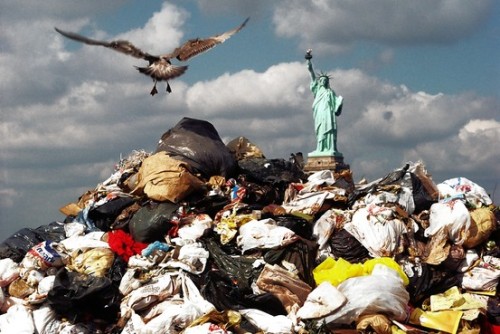
Did you know that every year we throw out enough plastic film to shrink-wrap the state of Texas? Or that the widely accepted E.P.A. figure of 4.4 lbs. of trash per person per day has actually been upped to 7 lbs. as a result of more recent survey by Columbia University?

These tidbits and more can be found in last Saturday’s edition of The Wall Street Journal. In Edward Humes’ “Grappling With a Garbage Glut,” Better BTU was thrilled to find an article that was comprehensible for the everyday reader and the expert alike.

As industry professionals, we’ve heard the figures designed to jolt consumers into the reality of how wasteful our society has become. We skim over facts about how many football fields our trash can fill up without batting an eye. So often we discuss waste in terms of billions of tons that it begins to lose its effect on us. That’s why it’s best for even the most advanced to go back to the basics every once in awhile and Humes’ article helps us do just that.  

In 2009, a team of researchers from the Massachusetts Institute of Technology decided to track its garbage the way other scientists follow migrating birds. After attaching electronic chips to its garbage, the team followed the trash trail as it traversed the continent on the road to recycling or an out-of-state landfill.

The U.S. has seen its number of landfills shrink from 18,500 to 1,900 in the past 30 years. While that is generally considered a good thing, most of us don’t think about how that increases the cost of transporting trash. The state of New York spent more than $300 million last year trucking its waste to out-of-state landfills, up to 300 miles away. It’s also worth noting that trash is now the number one export for America. While China’s leading export to the U.S. is computers, we fill up cargo containers with scrap cardboard for the return trip East.

Book Release Date: Apr. 19, 2012
But it doesn’t have to be like this. While our industry is working hard on making waste-to-energy technology more cost-effective, dramatic efforts have been made overseas to cut down on the amount of product packaging, which accounts for almost one-third of U.S. waste. European countries charge manufacturers, not taxpayers, for package waste and it’s made a difference.

Humes discusses different waste-to-energy projects and philosophies on both sides of the Atlantic and examines Waste Management’s experiment using S4 Energy Solutions’ plasma gasifier in conjunction with its landfill in Arlington, Ore. His book Garbology: Our Dirty Love Affair With Trash hits bookstores on Apr. 19th and we can assure you that there will be a copy on the shelves at Better BTU. 


The Wall Street Journal: Grappling With a Garbage Glut (Apr. 14, 2012)

Tuesday, April 3, 2012

Wanted: A Guide Dog, Not A Watch Dog


There have been debates about how involved the government should be in overseeing the development and implementation of renewable energy projects in the U.S. The E.P.A. already regulates emissions and some think it should take on a larger role to ensure that new technologies reduce the carbon footprint. Here at Better BTU, we’ve studied this matter in depth and continue to debate amongst ourselves. One thing we call all agree on is that it might be good to take a page from the European Union’s book.


In 2009, the European Commission established the Renewable Energy Directive, a committee that studied and reported on sustainability criteria for biomass. While the Commission elected to adopt a report on sustainability requirements for use of solid biomass and biogas in electricity and heating, they stopped just short of making it legally binding. 

Biomass Technology Group, out of The Netherlands, compiled a report for the Commission in February 2008 on the benefits and drawbacks of sustainability criteria as well as certification systems for biomass production. The study acknowledged that while biomass certification would guarantee greenhouse gas savings and protect biodiversity such as high conservation forests and wildlife habitats, the cost would form a serious barrier to small biomass producers.

Instead, the Renewable Energy Directive asked each member of the EU to file a national action plan yearly and recommended criteria relating to, among other things:

(b) a common greenhouse gas calculation methodology which could be used to ensure that minimum greenhouse gas savings from biomass are at least 35 percent (rising to 50 percent in 2017 and 60 percent in 2018 for new installations) compared to the E.U.’s fossil energy mix


The goal of this strategy is to advise member states on development in order to minimize risk of “varied and possibly incompatible criteria at the national level, leading to barriers to trade and limiting the growth of the bioenergy sector in the European Union.”

On this side of the pond, 17 of 50 states have adopted a Renewable Portfolio Standard that mandates that by 2020 a certain percentage of the state’s energy come from renewable energy sources. The states are free to pursue this goal in any matter, and while we like that it promotes growth in the industry through trial and error, it also lacks an overarching set of standards to help customers understand exactly what they are purchasing.

We’ve discussed the need for a standardization of language in the past (see Gasification: Definition, Please! and Definition Please - Part II) but we also would like to see a set of standards for calculating greenhouse gases so that you can compare technologies across a baseline. Currently, there is quite a bit of variety on how companies arrive at these numbers (ex. Is the fuel consumed by transportation or processing outside the biomass facility included?).

Environmental Protection Agency Watch Dog?
At Better BTU, we all agree that what we need is more leadership, not more regulations. Whether that leadership comes in the form of a government committee set up to develop a national roadmap for states to achieve its renewable energy goals or a non-partisan third party institute remains to be agreed upon. There are concerns that if it becomes a governmental issue, it will end up being run by the E.P.A. which has become known for being more political than practical.

We recognize that what works for Alabama won’t work for Wyoming and we don’t want to create a mold that everyone must try to fit in. But a group that can create a national roadmap for sustainability through clarification of definitions and rules of engagement could be exactly the type of guide dog this country needs.

Other Resources:


Tuesday, March 20, 2012

BioEnergy Symposium Wrap-up: Fuel Me Up!


One of the best things about attending a conference on renewable energy is the buzz. Regardless of size, there is an energy that you won’t find next door at the garden trade show. With the industry still in its development stage, there is an eagerness to share ideas and make connections.

Such was the case at the Second Annual BioEnergy Symposium in Charlotte last week. Hosted by UNC Charlotte’s IDEAS Center, the conference focused on transportation biofuels this year. Bringing together academics, industry professionals and government officials, the symposium also attracted a number of representatives from various nonprofits in the Southeast.

The Tar Heel state did not have a forum for the exchange of ideas until UNC Charlotte established one two years ago. With many in Charlotte looking to bring renewable energy projects to the city, the two-day conference acts as an excellent introduction to the industry.

“Biofuel in North Carolina is in the seed stage,” Lisa Lee Morgan, whose firm Calor Energy co-hosted the two-day conference, said. “Whether or not it actually gears up into a full-fledged industry in North Carolina is still unknown for a lot reasons.”

Morgan points out that until recently, biodiesel was still more expensive than petroleum diesel. Since the price off oil has shot through the roof there has been a renewed interest in biodiesel. Representatives from Piedmont Biofuels, National Biodiesel Board, Blue Ridge Biofuels and an EcoComplex research team from Appalachian State debated the various feedstocks and technology used in creating biodiesel.

Another afternoon session focused on compressed natural gas (CNG) and the validity of it for use as a biofuel. The consensus of the group was that although the building of infrastructure was moving slowly, the potential is significant. Representatives from Piedmont Natural Gas, Charlotte Truck Center, Geosyntec Consultants and TEA illustrated that CNG can come from a variety of sources including natural gas, landfill gas and gas derived from waste through thermal conversion. We found Dave Navey’s story of how he saved $5,000 over two years by purchasing a natural gas-powered Honda Civic GX while still averaging over 70 miles per day!

Although the majority of those in attendance seemed there to learn more about biodiesel and CNG, the session on ethanol was informative and enlightening for all. We learned that Congress and the EPA has recently cleared the way for E15 (a fuel made up from 15 percent bioethanol and 85 percent gasoline) after being hung up in government limbo for more than a year. It looks like you could see the option for E15 at gas stations as early as this summer.

While the forum was specific to North Carolina issues and many of the presenters were representatives from the Tar Heel State, we really felt this was a worthwhile for anyone looking to bone up on their biofuels knowledge. We hope some of you were able to make the trip!

Were you at the 2012 BioEnergy Symposium? Please feel free to post your feedback on our blog or send us a message at betterbtu@gmail.com! 

Friday, March 16, 2012

The Nuts and Bolts – Why We Do What We Do


We came across this question in one of our groups on LinkedIn and found it especially prudent. We wanted to share his question and our thoughts:

Q: What is the main reason for Biomass to Energy efforts? Biomass processing technologies are different and some of them are quite complicated and not even commercially viable without government support. So what is the main driver for investing in that effort? Is it the idea of getting rid of different wastes (manure, MSW, etc.), to get cheaper energy, to be prepared for a future fossil fuel deficit or...

So many of us in the field tend to get bogged down in the specifics that it's good to be reminded of why we push for biomass energy in the first place.

This gentleman is absolutely correct that at the moment there are many different technologies (some of which are, indeed, quite complicated) and that many of them aren't economically viable without government support...yet. The reason for that is because we're still in the development stage of the industry. The original computer and cell phone were also incredibly expensive and today almost everyone owns both. So many people fundamentally believe in this industry that they are working to get to the point of economic viability...and that involves a lot of trial and error

The question of why we do it is a good one. At the end of the day, the answer can be simplified in two points:

1. To greatly reduce the amount of trash being sent tot he landfill as well as take advantage of energy value of idled waste streams (waste wood, chicken litter, etc.)

2. To reduce pollution - both the greenhouse gases that emit from landfills and from burning dirtier elements like coal (currently we are literally burying one source of energy and digging up another.)

There are a lot of other positive reasons to push for the growth of the biomass industry as well as the renewable energy sector as a whole such as job growth, finding a cheaper source of energy that what we currently use, etc. But at the end of the day, it all boils down to those two reasons.

Wednesday, March 7, 2012

BioEnergy Symposium 2012 - Transportation Biofuels


If you are looking to increase your knowledge of the renewable energy industry or to make some contacts in the field, we suggest you attend the Second Annual BioEnergy Symposium, held on Mar. 13-14 at UNC Charlotte. Hosted by the UNC Charlotte IDEAS Center and its Environmental Assistance Office, as well as local firm Calor Energy, this year’s conference will focus on the area of transportation biofuels.

The two-day summit is the brainchild of Dr. Helene Hilger, director of the UNC Charlotte IDEAS Center and Regina Guyer, director of the Environmental Assistance Office. Both will be on hand at the conference alongside colleagues and industry professionals from across the Tar Heel State and Washington, D.C.

Jennifer Roberts from the Mecklenburg County Board of Commissioners will kick off the events on Tuesday morning with a welcome address before morning discussions begin. Steven Burke from the Biofuels Center of North Carolina will deliver the keynote address at noon in addition to making a presentation on NC Policy vs. Reality earlier in the morning. The afternoon will consist of breakout sessions covering topics ranging from technology and feedstocks to policy and finance.

Wednesday will begin with an introduction by Jason Wagner of the Centralina COG/Clean Fuels Coalition, followed by a presentation by Kelly Reagan from the City of Columbus (Ohio). The final breakout sessions and lunch will end the conference.

Registration is just $150 for the two-day event and information can be found on the UNC Charlotte Environmental Assistance Office website. For those who can’t afford the fee, scholarship money is available and an evening session on Food vs. Fuel will be open to the public at UNC Charlotte Center City on 320 E. 9th Street from 7-8:30 p.m.

One or more members from Better BTU will be at the symposium so tune into our blog next week for updates from the conference. Follow us on Twitter @betterbtu for live updates as well. 


Monday, February 27, 2012

Clinton Endorses Waste-to-Energy Initiatives in an Attempt to Close Landfills


It’s an unfortunate fact of our society that he who shouts the most is likely to get results, regardless of the validity of the message. Advocacy groups and politicians bank on that – frequently relying on negative campaigns to crush opponents. Radical environmental groups have successfully shut down several projects around the world simply by spreading fear to an unknowing public, often times completely misrepresenting a new technology or method.
Former President Bill Clinton. (CNBC)
Video: Pres. Clinton One-On-One 

Former U.S. President Bill Clinton has done his research. He has spent time post-presidency studying the negative effects of greenhouse gases and alternatives to the world’s waste problem. As a result Clinton endorses a combination of recycling and waste-to-energy practices and has set up the Clinton Climate Initiative to forward his agenda.

“One of my obsessions is trying to close the landfills in all these cities in the world by setting up systematic recycling of all the plastic, metal and glass, taking the organic material and making fertilizer for farmers who need it to increase their productivity and then burning the rest, either to make steam heat for factories or to feed into the electrical grid,” Clinton said in an interview with CNBC’s Maria Bartiromo.

Clinton’s solution is tiered and recognizes the fact that a combination of methods needs to be used in order to achieve the end goal of eliminating landfills. In addition to recycling and composting, Clinton backs waste-to-energy practices as a way of diverting leftover trash that would be otherwise headed towards a landfill.

Clinton’s endorsement of waste-to-energy technology is significant because of his status as a leader in the environmental sector. By clearly articulating the role waste-to-energy projects play into the bigger picture he may be able to unite a fractured environmental community.

Better BTU Take: Regardless of your political allegiance, Bill Clinton gets this one right. His well-researched views are bipartisan and something everyone should get on board with. 


More Information: Clinton Climate Initiative


Friday, January 20, 2012

Déjà vu: No Time for the Timid


This anecdote was shared by one of our members after his time at the West Coast Waste Conversion Congress:

A little over nine years ago, I was attending a conference sponsored by a genset company to gather information for a cow manure project I was considering. The presenter gave a great talk on his manure-to-digester gas project and I raced up to speak with him afterwards.

Eagerly shoving my card in his face, I told him that I had a similar project in the works and asked him if he would consider partnering with me.

“No,” was his flat response.

Stunned, all I could utter was “Why not?!”

“I’ve done one of these in my lifetime,” the presenter responded. “I have no reason to do two.”

He went on to describe all the financial and technical hurdles he had to overcome to see his project to fruition. Hearing him recount the many roadblocks he hit discouraged me and I later dropped the project, advising my clients that anaerobic digestion for animal waste-to-energy just wasn’t viable.

Needless to say, I missed that train. Anaerobic digestion is now a well-accepted practice and many people have made tidy profits off of projects relating to it.

I reflected on this as the West Coast Energy Conversion Congress came to a close. The conference perfectly illustrated the fact that we are still in the early days of gasification technology, giving me a strong sense of déjà vu to my time studying anaerobic digestion. Similar to then, the older technology (in this case, mass burn incinerators) has fallen out of favor and, although newer technologies with lower price points and cleaner emissions are on the horizon, they haven’t arrived yet.

But the real take-away lesson from the conference is that there are enough green technology advancements in the works, as well as plenty of brave developers trying to bring the projects to fruition. The sheer number of developers suggests that while many will fail, several will make it through to commercial and environmental viability. And I won’t scare so easy this time!

The above story is a perfect example of why Better BTU came into being. Our industry is growing and changing so fast and we feel that there isn’t a central place for communication on ideas, technologies and projects that work, don’t work, etc. That’s what we’ve come to be about: sharing information and working towards a greener future!  

Monday, January 9, 2012

Industry Influence Spotlight: Harvey Gershman


Photo Credit: GBB, Inc. 
Harvey W. Gershman has been a staple in the waste industry for almost 40 years. The president of Gershman, Brickner & Bratton, an international management consulting firm based in Fairfax, Va., has seen firsthand the change in the way our nation views and deals with waste as well as on continuing efforts to convert one man’s trash into another man’s treasure. And he has tracked it all in order to advise his clients on the best way to handle their waste management needs.

Gershman has the ear of some of the most important policymakers in Washington, advising organizations such as the National Center for Resource Recovery, U.S. Environmental Protection Agency (EPA), the U.S. Department of Energy and the Solid Waste Association of North America (SWANA). He has served on several boards and was awarded SWANA’s Professional Achievement Award in 1993.

The Northeastern University graduate most recently presented at the Waste Conversion Congress – West Coast in San Jose, Calif. on Dec. 6-7. His presentation, entitled “Different Technologies under the Commercial Microscope.” served as a sort of State of the Union for the waste conversion industry. Gershman tracks developments in the field with regards to trends on America’s MSW disposal, the number and type of waste-to-energy plants operating and emerging waste-to-energy companies and technologies. By presenting this material in a concise and readable format, Gershman helps us understand where we are and where we need to go.

Although the majority of GBB Inc.’s clients are municipalities that have tended towards more conservative solutions, Gershman stays on top of advancements in the waste conversion field in order to present all possibilities to clients. His philosophy is that the best solution is a 50-50 partnership between waste management systems with significant recycling and waste-to-energy projects. 

For more on Harvey Gershman and his consulting firm visit www. gbbinc.com.

Download his latest presentation "Different Technologies under the Commercial Microscope." Special thanks to Mr. Gershman for his permission to share this PowerPoint presentation. 

Friday, January 6, 2012

Definition Please - Part II


In our last blog entry we discussed the need for standardized terminology in our emerging field. We talked about how the term ‘gasification’ has been connected to images of cleaner and greener forms of technology. Because of the broad definition of the word, vendors using older technologies have sometimes slapped the term on its technology in an attempt to connect to the positive images of gasification without really cleaning up the process and reducing the emissions its putting into the atmosphere.

Today we’d like to expand on that topic by focusing on the other side. Just as some use the term ‘gasification’ to try to connect to its positive attributes, others (some radical environmental groups) try to link gasification projects to incinerators by reducing them both to the most basic definition and thereby, painting them all with the same smoky-colored brush.

Although both incineration and gasification can be lumped into the category of waste management, the process objectives differ. Although exceptions can be found on both sides, incineration is generally a process focused on destroying solid waste and reducing the amount of trash filling up landfills. Additional air is added to the burning process and extra steps are required post-combustion to reduce the emissions being released into the air. Gasification, on the other hand, converts solid fuel (i.e. trash, etc.) into another form of energy, frequently termed as for “a higher and better use.”

Incinerators have come a long way since Manlove, Alliott & Co. Ltd. built the first (known as a destructor) in 1874 in Nottingham, England. Nowadays environmental regulatory agencies have limits on the emissions a plant can release and most incinerators have instruments that clear the flue gas of gaseous and particulate pollutants.

While most incinerators have cleaned up their act, the image remains tarnished. The average consumer conjures up thoughts of billowing smokestacks upon hearing the word and some have capitalized on those fearsome images to try to stop the implementation of gasifiers as well.

One such example of an organization incorrectly lumping all biomass plants together comes in the form of a case study by the Global Alliance for Incinerator Alternatives (GAIA) and Greenaction for Health and Environmental Justice entitled Incinerators in Disguise. The second paragraph of the paper states:

Today, many dozens of companies are promoting technologies such as pyrolysis, gasification, plasma arc, and catalytic cracking as a way to allegedly eliminate and “recycle” all types of waste into energy. Many of these companies falsely and boldly claim their technology is “pollution-free” and has “no emissions.” Aware of the public’s opposition to incineration, the companies promoting these technologies all claim these are not incinerators but are a “green” alternative to incinerators.

While there may be a rogue company working with plasma arc technology out there that has claimed to be “pollution free”, we at Better BTU find the vast majority of companies instead claim to “reduce emissions” and many will even give a percentage number on the website. The language of this paper seeks to lump all waste-to-energy processes together and label them “hidden incinerators.”

The paper goes on to say:

Despite grandiose claims of industry, the facts prove that these technologies are in reality “incinerators in disguise” that heats the waste materials, and then burn the waste gases and emit dioxin and other pollutants into the air.

What this paper fails to explain is just because a process heats up the waste materials does not make it incineration. Similarly, all waste treatment processes emit a percentage of pollutants into the air – the issue is how much and the reason gasification technology is on the rise is because it produces less pollution than incineration.

The reason the “so-called conversion technologies,” as the paper refers to them, are categorized that way is because they do just that - convert trash into a gas that can be used for other things such as making electricity, chemicals, liquid fuel, etc.

Better BTU Take: At the end of the day, both sides are playing fast and loose with language and they are able to do so because of the broad definitions of terms like ‘gasification’ and ‘incineration’. How about we all spend more time looking at the science and less on the politics?